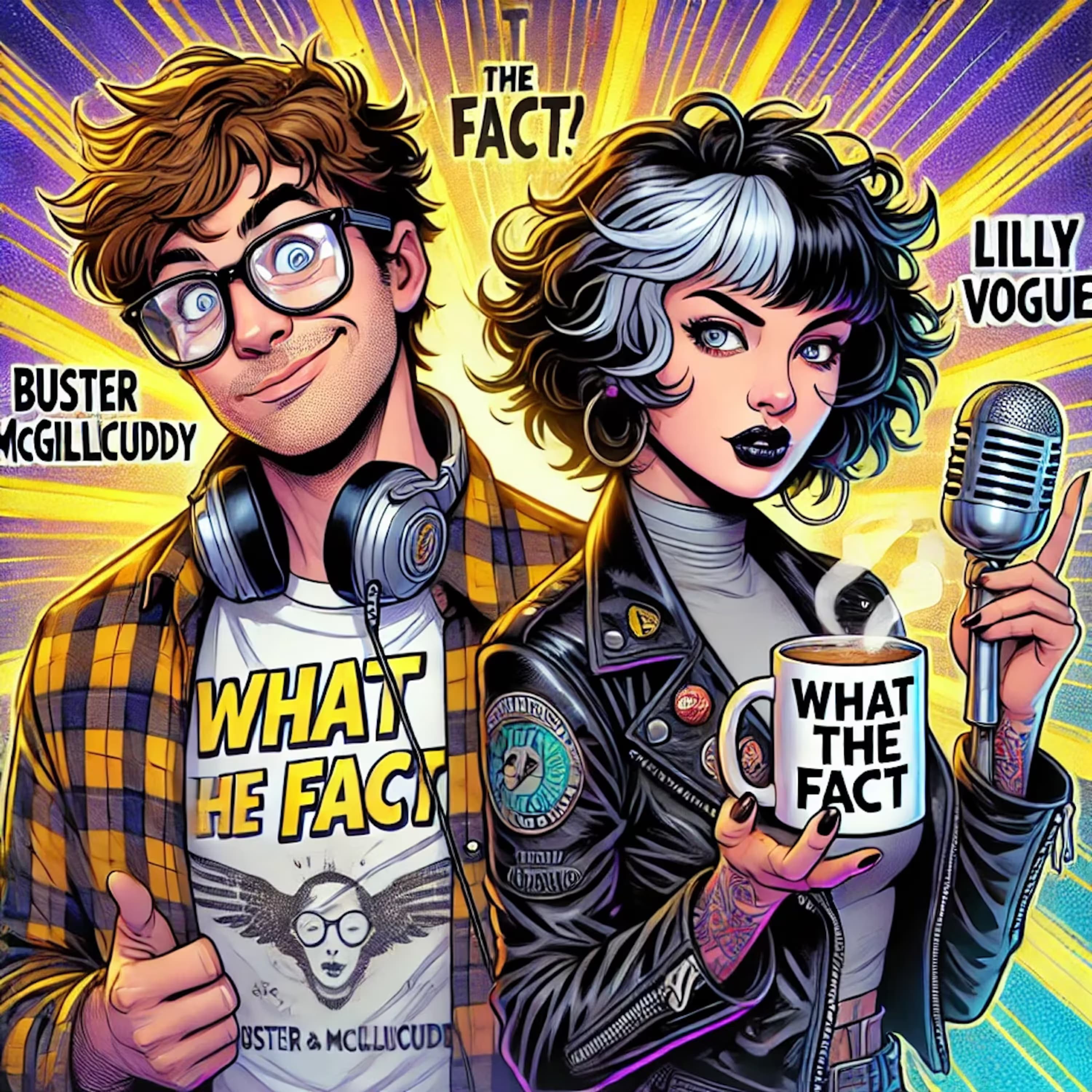
Episode 7: Haunted Dolls Robert and Annabelle
This episode uncovers the eerie legends of Robert the Doll and Annabelle, exploring their histories, media portrayals, and the cultural obsession with haunted objects. Lily and Buster engage in a lively debate about the supernatural versus human curiosity, adding humor and insight. From spooky origins to booming paranormal attractions, discover why these dolls captivate and unsettle audiences worldwide.
This show was created with Jellypod, the AI Podcast Studio. Create your own podcast with Jellypod today.
Get StartedIs this your podcast and want to remove this banner? Click here.
Chapter 1
Welcome
Lily Vogue
Welcome to Episode 7 of "What The Fact?!" where we dive into the eerie world of haunted dolls, including Robert and Annabelle.
Buster McGillicuddy
Dolls. Possessed ones. Never thought I'd be talking about that on a Tuesday, but here we are.
Lily Vogue
This episode, and the chills it may bring, is brought to you by The AI Salon at TheSalon.ai. A place where technology and creativity meet to spark inspiration.
Buster McGillicuddy
That’s fancy speak for “They’re pretty smart folks over there,” right?
Lily Vogue
Exactly, Buster. Now, back to the scary stuff—let's set the stage for Robert the Doll, one of the most famous haunted dolls of all time.
Chapter 2
Robert the Doll: A Haunted Legend from Key West
Lily Vogue
So, as I was saying, let’s dive into Robert the Doll—a little figure with a big reputation for being, well, utterly terrifying.
Buster McGillicuddy
Wait, terrifying? He looks like a kid's doll in a sailor suit! How scary can that even be?
Lily Vogue
Ah, funny you should say that. Robert was originally a gift to artist Robert Eugene Otto in 1904. His grandfather bought it for him during a trip to Germany, and it was crafted by the Steiff Company—you know, the ones famous for their teddy bears.
Buster McGillicuddy
So, his grandfather saw this creepy little sailor doll and thought, "Perfect for my grandson." Bold move.
Lily Vogue
Oh absolutely. But things started taking a turn after young Robert supposedly blamed the doll for all sorts of, shall we say, "mishaps." Broken toys, overturned furniture… you name it.
Buster McGillicuddy
Ah, the classic "It wasn’t me, it was the doll!" defense. Sounds like something I’d have tried as a kid.
Lily Vogue
Well, it didn’t end there. Over the decades, Robert the Doll became the subject of eerie stories—like his ability to move on his own, change facial expressions, and even giggle.
Buster McGillicuddy
Oh sure, because nothing screams nightmare fuel like a doll giggling in the middle of the night.
Lily Vogue
Right? And visitors to the East Martello Museum in Key West, where Robert is now displayed, have reported experiencing unexplained mishaps after disrespecting him.
Buster McGillicuddy
Disrespecting a doll? What does that even… like, they didn’t say “please” and “thank you”? Is Robert hosting etiquette classes now?
Lily Vogue
It’s actually a thing! People are advised to ask politely before taking his picture.
Buster McGillicuddy
Well, that’s one way to keep the tourists in line. What happens if you don’t?
Lily Vogue
Let’s just say stories of post-visit misfortunes are alarmingly common. One visitor laughed off the warnings, ignored Robert’s rules, and then tripped down the museum stairs.
Buster McGillicuddy
Ah, classic karma in action. Or clumsiness. You decide.
Lily Vogue
Joking aside, Robert’s fame exploded, thanks to media portrayals and horror films. It’s fascinating how objects like him draw us in—it’s like we can’t help but be intrigued by the macabre.
Buster McGillicuddy
Or maybe we’re just really good at scaring ourselves. Who needs ghosts when we’ve got overactive imaginations?
Chapter 3
Annabelle: From Urban Legend to Horror Icon
Lily Vogue
Speaking of infamous dolls, let’s shift gears to Annabelle. If you’ve ever seen the Conjuring movies, you might picture that creepy porcelain figure with the sinister smile. But let me tell you, the real Annabelle couldn’t look more different.
Buster McGillicuddy
Wait, really? So no porcelain nightmare? What, is she a plushie or something?
Lily Vogue
Close! Annabelle is actually a Raggedy Ann doll. You know, the soft, floppy kind with red yarn hair and a face that just screams “harmless.”
Buster McGillicuddy
So…this sweet little doll is supposed to be terrifying? I’ve seen lawn gnomes that look scarier.
Lily Vogue
Don’t let looks fool you. According to the infamous paranormal investigators Ed and Lorraine Warren, Annabelle was possessed by the spirit of a deceased girl—at least, that’s the story they fed us back in the 1970s.
Buster McGillicuddy
Oh sure, because what every haunted house needs is a demon doll, right?
Lily Vogue
Exactly. The Warrens claimed Annabelle displayed signs of possession—like moving on her own, scribbling creepy messages, and even attacking people. To contain her, they locked her in a glass case inside their Occult Museum.
Buster McGillicuddy
So she’s got her own exhibit now? I mean, I wouldn’t have pegged “evil doll” to be a career path, but good for her.
Lily Vogue
It gets even wilder. The movies took her story and turned it up to eleven, trading her down-to-earth Raggedy Ann look for something straight out of your nightmares. The rationale? The filmmakers said the real Annabelle just didn’t look “scary enough.”
Buster McGillicuddy
See, that’s what I don’t get. If she’s as haunted as the Warrens say, shouldn’t she be terrifying on her own? Like, why give her a Hollywood glow-up?
Lily Vogue
Exactly, and this is where things get murky. Critics—especially skeptics in the academic world—have pointed out there’s little actual evidence for the Warrens’ claims. Some even suggest the whole thing was just a clever marketing ploy to boost their museum’s fame.
Buster McGillicuddy
A haunted doll as a PR stunt? That’s…kind of brilliant, actually.
Lily Vogue
Isn’t it? And it’s a recurring theme—how urban legends evolve and spread, shaped by society’s fascination with the supernatural. We turn these objects into icons of fear, whether the stories hold up or not.
Buster McGillicuddy
So what you’re saying is, sometimes the scariest thing isn’t the doll, it’s how good we are at telling spooky stories about it.
Chapter 4
The Fascination with Haunted Objects
Lily Vogue
You know, Buster, it’s funny how we’re not just scared of these haunted dolls—we’re drawn to them. Like, there’s something about the idea of ordinary objects holding extraordinary, even terrifying, powers that keeps us hooked. Almost as if the story itself is what pulls us in.
Buster McGillicuddy
Right, because nothing says "must-see" like a doll that might ruin your life if you forget to say “Excuse me.”
Lily Vogue
But there’s more to it than that. Dolls occupy this really unique psychological space—they’re meant to resemble humans, yet they don’t quite get there. That “almost, but off” feeling? It gets to us. It’s called the uncanny valley.
Buster McGillicuddy
Uncanny valley, huh? Fancy term for “creepy as all get-out.”
Lily Vogue
Exactly! And it explains why so many horror stories involve dolls. They combine familiarity with just enough weirdness to keep us unsettled. Add a backstory about curses or ghosts, and suddenly you’re doubling the nightmare potential.
Buster McGillicuddy
Kinda genius, honestly. Slap a quirky legend on a doll and boom—tourist attraction. Like Robert and Annabelle, right? The museums, the movies… total cash cows.
Lily Vogue
Oh, absolutely. Haunted dolls are a business model. Take conventions like TapsCON that showcase Robert, for example. Enthusiasts gather, share stories, and celebrate what’s essentially a niche subculture of fear.
Buster McGillicuddy
Wait, is this like Comic-Con, but for creepy stuff?
Lily Vogue
Pretty much. And it raises a question—why are we so good at turning fear into entertainment? Is it about catharsis, do you think? Facing our fears in controlled doses?
Buster McGillicuddy
Or it’s just plain fun to spook yourself silly. Practicality’s overrated, right?
Lily Vogue
Maybe so, but it’s a very human thing to do. Whether it’s haunted dolls or local ghost stories, we’re endlessly curious about the extraordinary. Even when deep down, we know the explanations might not hold water.
Buster McGillicuddy
Like blaming a spooky doll for your clumsiness on museum stairs?
Lily Vogue
Exactly. But haunted objects let us explore something bigger. They’re windows into how we grapple with the unknown, turning ordinary items into symbols of fear, devotion, or even hope.
Buster McGillicuddy
Hope? Now, that’s a stretch. But who am I to argue? If a “haunted” Raggedy Ann doll can make someone feel something, maybe it’s worth keeping around.
Lily Vogue
See, now you’re getting it. The stories may be exaggerated—or even completely fabricated—but they feed into our need to connect, to question, and sometimes, to just suspend disbelief for a little while.
Buster McGillicuddy
And on that terrifyingly profound note, we’ve officially gone from “What the Fact?!” to “What the Philosophy?!”
Lily Vogue
It’s been a journey, hasn’t it? But whether you’re a skeptic, a believer, or somewhere in between, there’s no denying this: Haunted dolls are here to stay, grinning on shelves or making cameos in nightmares. And maybe, just maybe, that’s okay.
Buster McGillicuddy
As long as they stay on the shelves and outta my house, we’re all good.
Lily Vogue
Fair point. And that’s a wrap for today’s episode of "What the Fact?!" Thank you for joining us in the world of haunted dolls. Until next time, stay curious…and maybe stash that old doll in the attic, just in case.